Lead Generation Strategies That Actually Convert
Author: Richa Naik, Digital Marketing Manager
Date : 5 August 2026
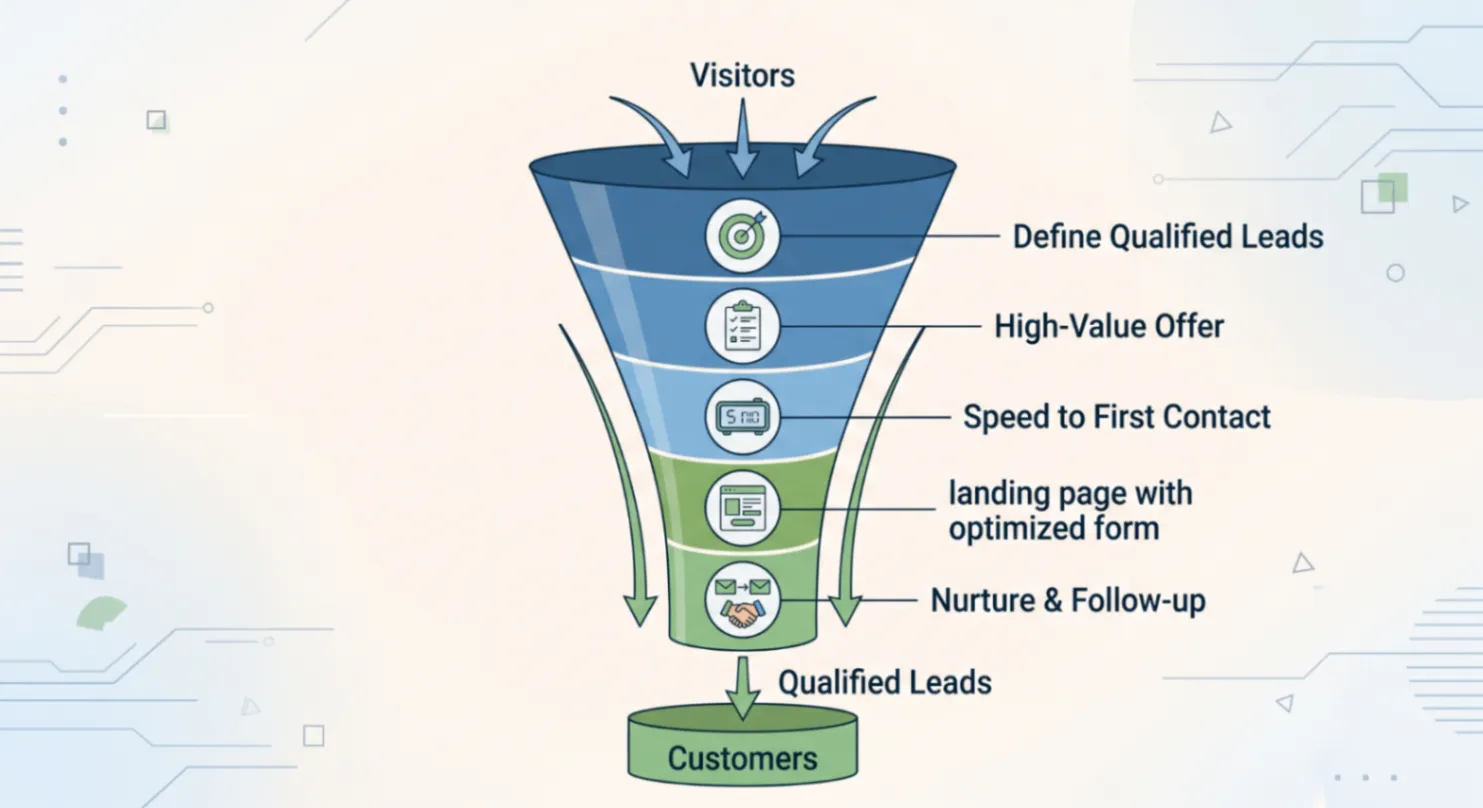
Most lead generation advice optimizes the wrong number. It chases volume — total leads produced — when the number that pays the bills is qualified leads that eventually become customers. A campaign that floods your pipeline with leads that never close is not a cheap success; it is an expensive way to keep a sales team busy. This guide is one part of our broader performance marketing and lead generation hub.
Define "Qualified" Before You Spend a Dollar
Every effective lead program starts by defining, concretely, what a qualified lead looks like for your business — the firmographics, the intent signals, the budget or authority markers that correlate with closing. Do this with sales in the room, because the most common source of friction in lead gen is a gap between what marketing calls "qualified" and what sales considers worth a call. Agree on the definition, in writing, and both sides stop wasting effort.
Match the Model to the Goal
The performance marketing models play distinct roles here. CPA ties cost directly to a completed lead action, making it the natural engine for lead generation, while CPM and CPC feed it by building awareness and driving qualified traffic toward the conversion point.
The Offer Decides the Quality
What you ask for in exchange for contact details shapes both volume and quality. A vague, low-commitment offer pulls high volume and low intent; a specific, high-value offer — a tailored audit, a real quote, a personalized consultation — pulls fewer but far more serious prospects. Test offers against downstream close rates, not against how many leads they generate, or you will keep optimizing for a number that looks good and converts badly.
Speed to First Contact Is the Highest-Leverage Metric You're Probably Ignoring
This is the closest thing lead generation has to a free lunch.
Widely cited research on lead response times — most notably the Lead Response Management Study, which analyzed thousands of inbound leads — found that contacting a web lead within about five minutes, versus waiting thirty, made reps dramatically more likely to reach and qualify the prospect. The odds fall off a cliff within the first hour. Yet many businesses take hours or days to respond.
The striking part is that improving it usually costs nothing in ad spend — it is a process and staffing change. Route leads instantly, alert a human in real time, and have someone ready to respond in minutes, not "by end of day." Few investments in a lead program return more.
Landing Pages Make or Break It
Even a well-targeted campaign with a strong offer underperforms if the page cannot build trust and communicate value fast. This is where conversion rate optimization pays off directly: small gains in clarity, load speed, and form design translate into measurably more leads from the same traffic. On form length specifically, there is a real trade-off — shorter forms generate more leads, longer forms generate fewer but better-qualified ones. Choose based on your offer's value and your sales team's capacity to follow up, not on a rule of thumb.
Nurture the Leads That Aren't Ready Yet
A large share of leads are not ready to buy today but could be in weeks or months. Businesses that chase only the immediately sales-ready lead, and discard the rest, leave real money on the table. A structured nurture sequence — supported by marketing automation so it stays consistent regardless of volume — recovers a meaningful portion of leads that simply needed more time. Lead scoring helps here too, ranking incoming leads so sales works the most promising ones first instead of treating every lead identically.
Track the Full Funnel, Not the First Step
Judge a lead program by how efficiently leads become paying customers, which ties straight back to customer acquisition cost. The true measure of success is the cost of an actual customer, not the cost of a lead in isolation — a distinction that quietly separates programs that look good on a report from programs that make money.
Don't Bet Everything on One Channel
A lead program running entirely on a single channel is one algorithm update or cost spike away from a bad quarter. Diversify across search, social, and display so the program has resilience even when one channel is currently the star. And align campaign timing with sales capacity — a surge of leads arriving when the team is already stretched converts worse than a steady flow, no matter how well the campaign performed.
Case Study: Pointing Campaigns to the Right Audience
In a recent engagement, three of our clients — all of whom asked to remain anonymous — were running campaigns aimed at the wrong audience.
By redefining their target market and redirecting spend toward the segments that matched their real buyers, we increased those clients' revenue by 200%. It is the clearest proof of the point running through this guide: lead quality is decided by who you target, not just how many leads you generate.
The Bottom Line
Lead generation is far more than driving traffic to a form. Define quality with sales, match the pricing model to the goal, build a specific offer, optimize the page, respond in minutes, nurture the not-yet-ready, and track all the way through to real customers. Get in touch with our team to build a lead generation strategy around your business.
Ready to put this into practice? Contact 47 Yards to build a performance marketing strategy around your business.