Media Buying Explained: How Brands Purchase Ad Space Strategically
Author: Richa Naik, Digital Marketing Manager
Date : 5 August 2026
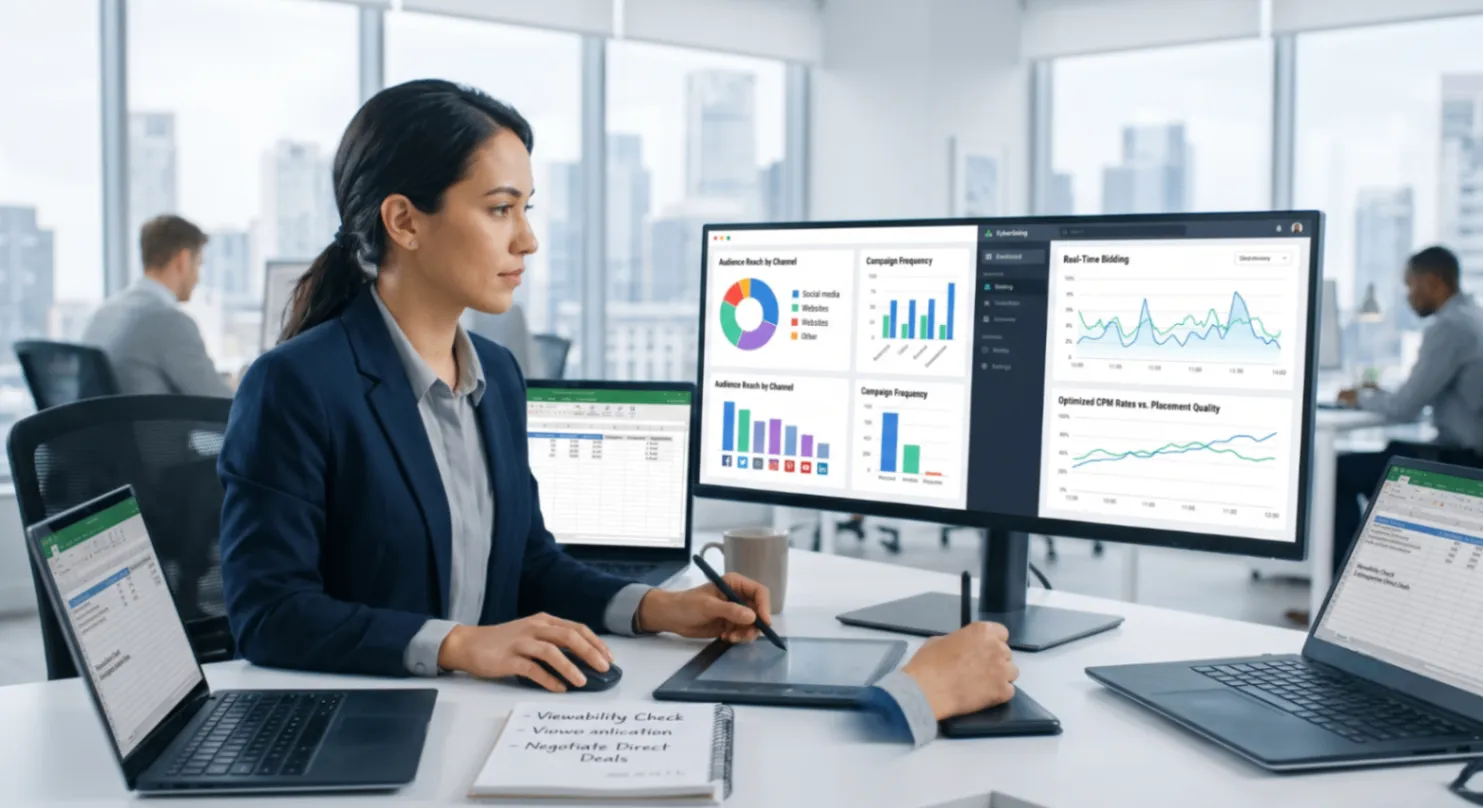
Media buying is the work of purchasing advertising space or time — across websites, social platforms, streaming, and other properties — on behalf of an advertiser. It is more than pressing "launch" in an ad account: it is figuring out where a target audience actually spends attention, negotiating rates and placements where possible, and matching a budget to the inventory that will reach the right people. It is one component of the wider strategy in our performance marketing and lead generation guide.
Strategic Buying vs. Just Running Ads
Anyone can launch a self-service campaign through a platform's default tools. Strategic media buying is the more deliberate version: evaluating multiple placement options, negotiating where leverage exists, and building a media plan around a specific audience and budget rather than accepting one platform's default targeting and bid recommendations. The difference shows up in efficiency — reaching the right audience for less.
Where Media Buying Is Most Central
Media buying matters most for CPM advertising, because securing the right placements at the right rates directly determines how efficiently an awareness campaign reaches its audience. Poor buying can hit an impression target while missing the segments that actually matter — a campaign that looks successful on paper and does nothing for the business.
Balance Reach, Frequency, and Cost
Effective buying juggles three linked variables: how many unique people you reach, how often each sees the ad, and what it all costs. Chase reach at the expense of frequency and people see the ad once, never building recall; chase frequency in too narrow an audience and you hit diminishing returns and fatigue. The craft is holding those in balance for a specific goal.
Inventory Quality Is Not the Same as CPM Rate
A low CPM is not automatically a good buy, because not all impressions are worth the same.
Two factors matter independently of price.
Viewability: was the ad actually visible on screen, or loaded below the fold where no one saw it?
Brand safety: did it appear next to appropriate content, or beside something that damages your brand by association?
A cheap impression that was never seen, or seen in the wrong context, is more expensive than a pricier one that reached a real person in a safe environment.
Programmatic vs. Direct
Media buying happens two broad ways. Programmatic uses real-time bidding systems to purchase inventory automatically, offering efficiency and scale. Direct buying negotiates placements with specific publishers, offering more control over premium or highly specific inventory. Most sophisticated plans use both — programmatic for scale, direct for the placements worth negotiating over.
Negotiation Is Where Partners Earn Their Fee
Experienced buyers negotiate rates, placement guarantees, and value-adds like bonus impressions or preferred placement, especially on larger ongoing commitments. This is one of the clearest places a good media buying partner adds value beyond what self-service tools deliver — leverage and relationships a first-time buyer does not have.
Guard Against Ad Fraud
Non-human traffic and misrepresented placements remain a persistent problem in digital media, inflating impression counts without delivering value. Work with reputable platforms and partners that run fraud detection, and review traffic-quality data where you can. Budget lost to fraud is budget lost silently — it does not show up as a line item, only as results that never materialize.
Contextual Targeting Is Back
Beyond targeting audience segments directly, contextual targeting places ads based on the content of the page itself — reaching people by what they are reading right now rather than their behavioral history. As privacy regulation and the decline of third-party cookies limit behavioral data, contextual relevance has become an increasingly important complement rather than a fallback.
Treat the Media Plan as a Living Document
A media plan is a starting hypothesis, not a fixed commitment. Build in regular review points to shift budget toward placements and channels that are actually delivering, rather than locking the whole budget upfront. Coordinate across channels too — display, social, video, streaming — since a unified plan that accounts for how audiences move between them beats the same budget scattered across platforms in isolation.
Plan Around Seasonality
Inventory costs and availability swing through the year, spiking when many advertisers compete for the same premium placements around major shopping or industry events. Buying ahead of known high-demand periods, rather than reacting once prices have already climbed, generally wins better rates and availability.
This connects media buying to the rest of the funnel: awareness built through smart buying feeds later PPC and lead generation, and can meaningfully lower downstream customer acquisition cost.
Demand Transparent Reporting
Programmatic buying can put multiple platforms, exchanges, and fees between your budget and the final placement. Insist on transparent reporting that shows where the money actually goes and what fees apply at each stage. Opaque reporting makes it impossible to tell a genuinely well-optimized campaign from one that merely looks good — and it is often where margin quietly disappears.
The Bottom Line
Media buying is the strategic process of securing the right placements, at the right rates, to reach a specific audience — especially critical for CPM-based awareness. Balance reach, frequency, and cost; weigh inventory quality over headline CPM; plan for seasonality; and connect every buying decision back to the rest of the funnel. Learn about our media buying and CPM services to see how strategic placement could strengthen your campaigns.
Ready to put this into practice? Contact 47 Yards to build a performance marketing strategy around your business.