Digital Advertising Explained: A Guide to the Paid Channels Beyond CPA, CPC and CPM
Author: Richa Naik, Digital Marketing Manager
Date : 15 September 2026
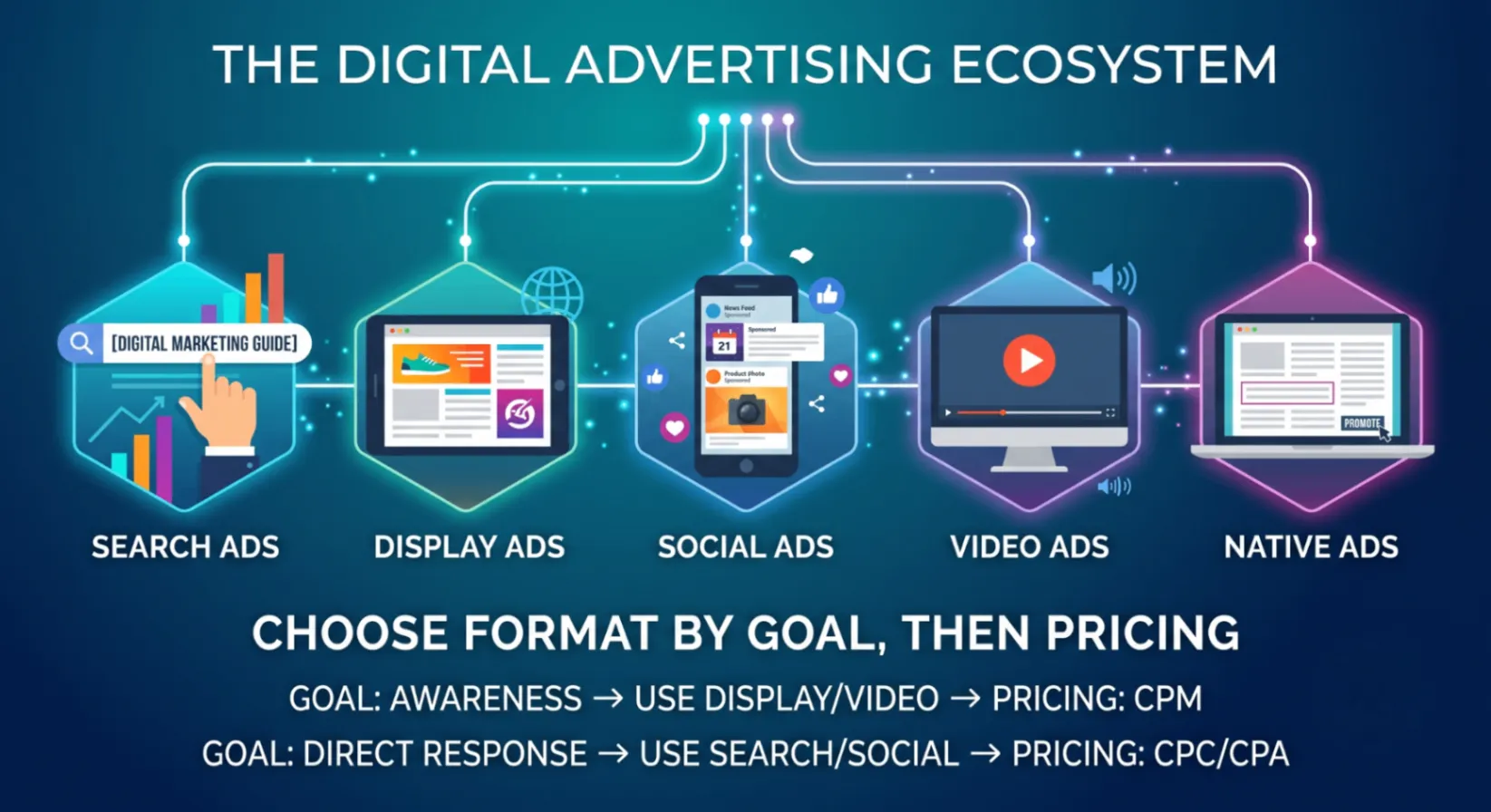
CPA, CPC, and CPM describe how you pay. They do not describe what you are buying. Digital advertising spans several formats — search, display, social, video, native — each reaching people in a different context and each suited to a different job. Choosing the format is a separate decision from choosing the pricing model, and confusing the two is where a lot of budget goes to waste.
Search Advertising
Search ads meet people at the moment of active intent, when someone is already looking for what you offer. That intent makes search one of the highest-converting formats and a natural fit for direct response, which is why it anchors most PPC programs. The limit is volume: you can only reach as many people as are searching.
Display and Programmatic
Display places visual ads across a vast network of sites, bought increasingly through programmatic systems. Its strength is reach and awareness; its weakness is that it interrupts rather than meets intent, so click and conversion rates run lower. Display earns its keep in awareness and — crucially — retargeting, where it re-engages people who already know you. Securing quality placements at fair rates is the domain of media buying.
Social and Video
Social advertising offers precise audience targeting and creative range, working across the funnel from awareness to direct response. Video — on social feeds, streaming, and video platforms — earns high engagement and recall and is strong for storytelling and brand building, at higher production cost and often higher CPMs. Neither is universally "better"; each fits a goal.
Native Advertising
Native ads match the form of the content around them, earning attention by being less disruptive. Done honestly they inform; done deceptively they erode trust. The line is transparency — native should be clearly identifiable as advertising even as it blends in.
Choose Format by Goal, Then Pricing by Format
Work in that order. Awareness goals favor display, video, and CPM pricing; direct-response goals favor search and social with CPC or CPA. Picking a format because it is trendy, then forcing a mismatched goal onto it, is the most common and expensive error here. Start from what you want to achieve and let it dictate both format and pricing model.
Measure Each Format Fairly
Formats are not comparable on a single number. Search is judged on conversions and cost per action; display and video often on view-through, reach, and assisted conversions; social somewhere between. Holding an awareness format to a direct-response metric — or vice versa — produces confident, wrong conclusions and gets working campaigns killed. Judge each against the job you hired it for, and reconcile them through proper attribution.
Build a Multi-Format Strategy
The strongest programs blend formats across the funnel: display and video build awareness, social and search capture and convert demand, retargeting closes the gap. Allocate budget to the roles each format plays rather than crowning one winner, and coordinate creative so a person moving between formats sees one coherent story rather than three disconnected ads.
The Bottom Line
Digital advertising is one paid part of the wider digital marketing mix — a set of formats, each reaching people in a different context and suited to a different goal. Decide the goal, choose the format that fits, then choose the pricing model that fits the format — and measure each on its own terms. Explore our services to build a multi-format strategy that fits your objectives.
Ready to put this into practice? Contact 47 Yards to build a multi-format digital advertising strategy around your business.