SEO Explained: How Organic Search Complements Paid Performance Marketing
Author: Richa Naik, Digital Marketing Manager
Date : 15 September 2026
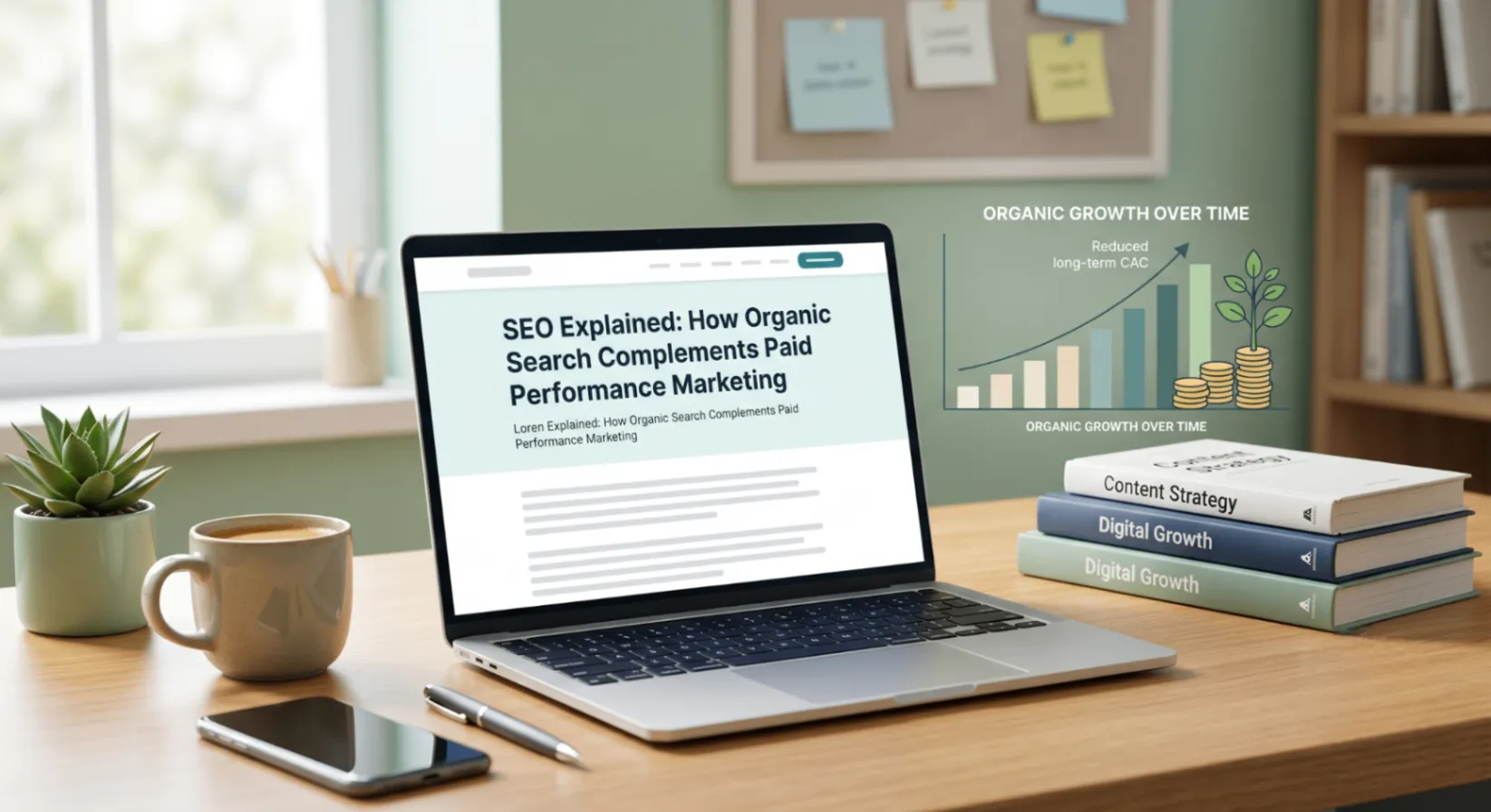
Paid search rents visibility; SEO buys it. The moment you stop paying for PPC, your listings vanish. Rankings you earn through SEO keep sending traffic long after the work is done. That difference in economics is the whole reason to run both.
What SEO Actually Involves
SEO is the practice of earning organic rankings by matching what searchers want with content and a site that deserve to rank. It rests on three legs: relevant, useful content; on-page optimization that makes each page's relevance clear; and the technical health and authority that let search engines trust and access your site. Neglect any one and the other two underperform.
Why It Takes Time
SEO is slow by nature, and anyone promising instant rankings is selling something. Search engines need to discover, evaluate, and build trust in pages, and authority accrues gradually. The upside is durability: a page that reaches the top for a valuable query can hold that position for months or years, delivering traffic at no incremental cost per click. The cost is front-loaded patience; the payoff is a compounding asset.
Start With What People Actually Search
Effective SEO begins with keyword research grounded in real search behavior and intent, not the terms you wish people used. A page targeting "how does CPA marketing work" serves a researcher; one targeting "CPA agency pricing" serves a near-buyer. Match content to the intent behind the query, and prioritize terms where you can realistically compete rather than the highest-volume, most-contested words.
Technical SEO: The Part You Don't See
Site speed, crawlability, mobile experience, and clean structure form the foundation that everything else stands on. Brilliant content on a slow, hard-to-crawl site underperforms. This layer is invisible to visitors but decisive for rankings, and it overlaps directly with the landing page and conversion work that turns the traffic into customers.
How SEO and Paid Search Reinforce Each Other
They are not an either/or. Paid search captures demand immediately while SEO builds; SEO data reveals which terms convert, sharpening paid targeting; and owning both the paid and organic result for a query increases total clicks and crowds out competitors. Mature programs run them together, each covering the other's weakness.
SEO Lowers Long-Term Acquisition Cost
Here is the strategic payoff, and it is arithmetic.
Suppose paid search brings you a customer at a $120 acquisition cost, and it holds at $120 for every customer as long as you keep paying. An SEO investment is heavy up front and near-zero per click once it ranks. As organic traffic grows, a rising share of customers arrive at a marginal cost close to nothing, pulling your blended CAC down month after month. Paid keeps a flat cost curve; SEO bends yours downward over time.
That is why cutting SEO to fund more paid can feel efficient this quarter and quietly raise your costs next year.
Measure Progress Before Rankings Move
Rankings lag, so track leading indicators too: impressions and clicks in search, keyword coverage, pages indexed, and the quality of sites linking to you. These move before positions do and tell you the program is working before the headline rankings catch up — which keeps a working strategy from being abandoned during the inevitable slow start.
The Bottom Line
SEO is a durable, compounding complement to paid search: slower to start, far cheaper to sustain, and increasingly valuable as it lowers your blended cost of acquiring customers. Run it alongside paid, not instead of it. See how our services combine paid and organic search into one strategy.
Ready to put this into practice? Talk to our team about combining paid and organic search into one strategy.