Lead Generation Compliance: Consent, Disclosure, and Data Handling Basics for Marketers
Author: Richa Naik, Digital Marketing Manager
Date : 30 October 2026
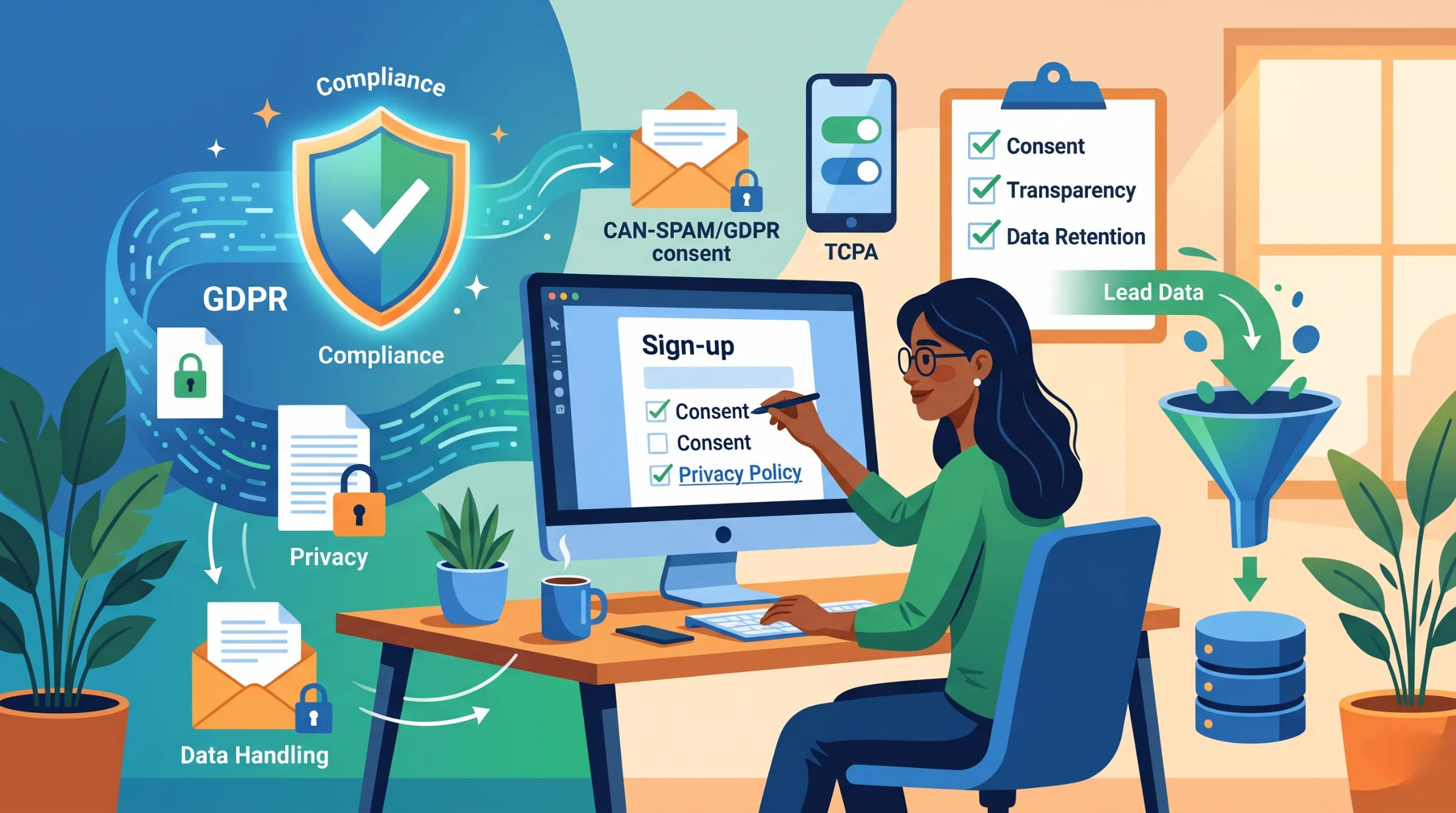
Lead generation collects personal information and uses it to contact people. That puts it squarely inside data protection and marketing communication law in most countries. Mistakes are costly: regulators can issue fines, platforms can suspend accounts, and consumers who feel misled stop trusting the brand.
This guide gives marketers a working map of the main concepts: lawful basis and consent, disclosure, communication rules, partner responsibilities, and data handling. It is an overview for orientation and is not legal advice. Laws differ by country and change over time, so have a qualified lawyer review your forms, policies, and partner agreements for the places where you operate.
Why Compliance Belongs in the Marketing Plan
Compliance affects conversion rates, data quality, and brand reputation, so it is a design input and not a late check. Clear consent language reduces complaints. Accurate disclosures reduce refund requests and chargebacks. Clean data processes reduce the risk of using records you should not have.
Compliance also affects measurement. Consent choices determine which tags may fire and what data you can collect, which changes what your reports show, as noted in the conversion tracking audit checklist.
Core Concepts
Personal Data and Lawful Basis
Under the EU and UK GDPR, you need a lawful basis to process personal data. Common bases for marketing are consent and legitimate interests, and the correct one depends on the channel, the audience, and local rules. Under the ePrivacy rules that sit alongside GDPR, electronic marketing to individuals often requires prior consent, with limited exceptions such as certain communications to existing customers. Check how this applies in each country you target.
What Valid Consent Looks Like
GDPR describes consent as freely given, specific, informed, and unambiguous, given by a clear affirmative act. In practice:
- Use an unticked checkbox, not a pre-ticked one.
- Name who is asking and what they will send.
- Separate marketing consent from acceptance of terms or from the service itself.
- Record who consented, when, how, and to which wording.
- Make withdrawal as easy as giving consent.
Transparency
At the point of collection, tell people who you are, why you collect their data, how you will use it, who you share it with, how long you keep it, and how to exercise their rights. A link to a clear privacy notice near the form is standard practice. Plain language works better than legal text.
Rules by Channel
In the United States, the CAN-SPAM Act sets requirements for commercial email, including accurate sender and subject information, identification of the message as an advertisement where applicable, a valid physical postal address, and a clear way to opt out that you honor within the stated period. Under European rules, consent is generally required before sending marketing email to individuals. Check the position for each country.
Phone Calls and Text Messages
In the United States, the Telephone Consumer Protection Act restricts certain calls and texts, particularly those using automated dialing or prerecorded voices, and often requires prior express consent, with stricter requirements for marketing. Do-not-call registries also apply. Many countries have similar regimes. Because penalties can be significant, get specialist advice before running outbound calling or SMS programs, and keep records of consent for each number.
Retargeting and Tracking
Cookies and similar technologies are regulated in many regions. Where consent is required, tags that track or personalize should wait for it, and your consent banner should offer a real choice. Ad platforms have their own policies on sensitive categories and data use.
Disclosure and Advertising Claims
Compliance is not only about data. Advertising law requires claims to be truthful and supported. Regulators such as the U.S. Federal Trade Commission expect advertisers to have evidence for claims before making them. Rules also cover testimonials, endorsements, and any material connection between an endorser and the advertiser, which should be disclosed clearly. Where you offer an incentive for submitting a lead, state the terms plainly.
Some sectors, such as finance, health, insurance, and legal services, have extra rules and platform restrictions on targeting and wording. If you work in one of these, check the specific rules before building campaigns, and keep landing page claims consistent with them, as described in landing page conversion for lead generation.
Working With Partners and Vendors
If you buy leads or use affiliates, you remain responsible for how data was collected and how you contact it.
- Require partners to show the consent language and the page where it was captured, with timestamps.
- Specify permitted methods and prohibited practices in the contract.
- Do not rely on a partner's assurance alone; verify a sample.
- Where partners process data for you, put data processing terms in writing, as required by many data protection laws.
- Keep the right to audit and to reject non-compliant leads.
These points mirror the controls recommended for results-based deals in our CPA marketing guide.
Handling Data After Capture
Collect Only What You Need
Each field should have a purpose. Excess data increases risk and reduces conversion.
Secure It
Limit access, use reputable systems, and make sure data moving from forms to the CRM is encrypted in transit. Know where data is stored, including which countries, since international transfers carry additional requirements in some regimes.
Respect Rights Requests
People can ask what you hold, correct it, or ask you to delete it, depending on the law that applies. Set up a process and a contact point, and respond within the required time.
Set Retention Periods
Decide how long each type of lead data is kept, and delete or anonymize it when it is no longer needed. This is also a quality practice: stale leads clutter the CRM. Your nurture workflows should follow the same rules, as set out in lead nurturing and speed to lead.
A Practical Compliance Checklist
- Map every form, tracking tag, and data flow.
- Review consent wording, checkboxes, and privacy notices.
- Confirm which laws apply to each audience and channel.
- Log consent with timestamp, source, and wording version.
- Add working unsubscribe and opt-out handling to every channel.
- Check partner agreements and sample their lead capture.
- Set retention and deletion rules.
- Document the above and review it at least annually, or when you add a channel or region.
Who Should Be Involved
Marketing owns the forms and messages, but compliance works best as a shared responsibility. Involve legal counsel or a data protection specialist, IT or security staff, and sales leadership. If your organization has a designated data protection officer, include them in reviews. When selecting external help, ask agencies how they handle data and consent, using the questions in how to choose a performance marketing agency. You can also talk to our team about campaign setup through our lead generation services.
Documenting Your Decisions
Regulators and platforms often ask not only what you do but how you decided to do it. Keep a short compliance file: a list of data flows and tools, the legal basis or consent mechanism for each, copies of the consent wording by date, the privacy notice versions, partner agreements, and a log of rights requests and responses. This file helps you answer questions quickly, onboard new team members, and show good faith if a complaint arises. It also helps when you change systems, because you can see what must be migrated and what should be deleted.
When Something Goes Wrong
Despite good processes, errors happen: a form sends data to the wrong system, a partner uses a list improperly, or a message goes to people who opted out. Have a simple response plan. Stop the activity, record what happened and when, assess which people and data are affected, fix the cause, and involve your legal or data protection contact promptly, since some laws set deadlines for notifying regulators or individuals in specific circumstances. Learn from each incident by adding a check that would have caught it.
Training Your Team
Policies work only when people know them. Run a short briefing for everyone who touches leads: marketers, sales representatives, and support staff. Cover how consent is recorded, what may and may not be said in outreach, how to handle opt-outs and rights requests, and whom to ask when unsure. Repeat the briefing when laws, tools, or campaigns change, and keep a record of attendance. Practical, scenario-based examples are more memorable than a list of rules.
Frequently Asked Questions
Do I need consent to email a business contact?
It depends on the country, the type of recipient, and the relationship. Some regimes treat business contacts differently, others do not. Get local advice.
Is a privacy policy link enough?
A link supports transparency but does not replace consent where consent is required. Both are usually needed.
Can I buy lead lists?
Purchased lists carry significant risk, because you may not know how consent was obtained. Many regimes require you to verify the source and basis before use.
How long can I keep leads?
Only as long as you have a legitimate need and a lawful basis. Define periods by data type and document them.
Key Takeaways
Treat compliance as part of campaign design: collect valid consent, be transparent, follow channel rules, hold partners to standards, protect and limit data, and keep records. Verify the rules for your markets with a qualified adviser, and review your setup whenever your channels or regions change.
Ready to put this into practice? Talk to our team about setting up lead generation campaigns with consent and data handling built in.